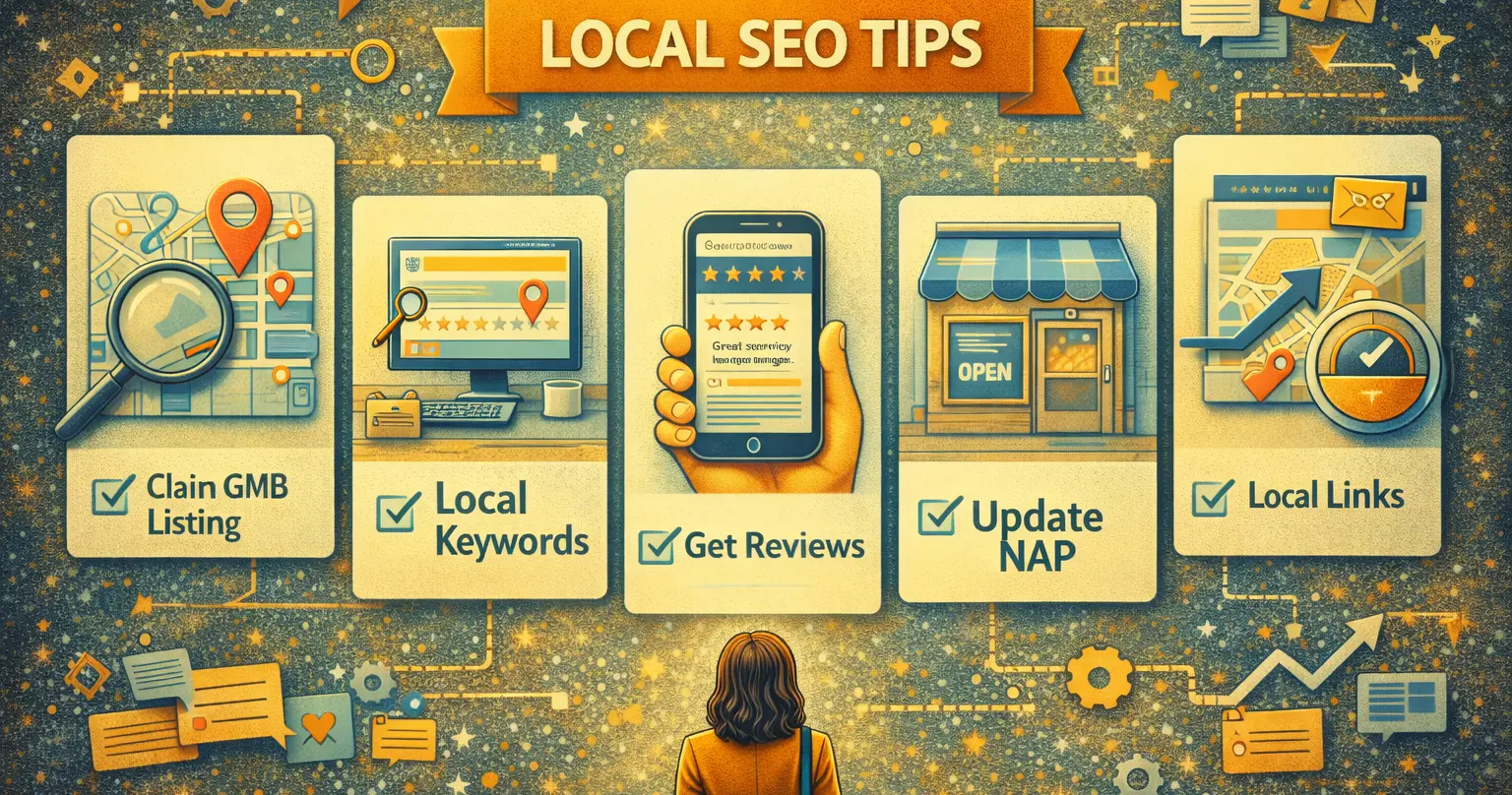

SEO for small businesses is crucial in today’s digital landscape, especially if you’re aiming to enhance your local presence in competitive markets like San Diego. With search engines constantly evolving, it’s important for small businesses to employ effective strategies to improve visibility and connect with local audiences. This guide offers five essential tips to help you rank higher locally, focusing on optimizing website speed, implementing local SEO best practices, enhancing user experience, utilizing high-quality local content, and leveraging local backlinks and social media. These strategies not only improve search engine rankings but also foster stronger community relationships, ensuring your business remains competitive and relevant. By following these practical tips, you can effectively engage your target audience, driving growth and success in your local market.
Optimize Website Speed and Mobile Usability
Improving Page Load Times
Page speed’s a big deal in SEO for small businesses. If your pages take too long to load, you’re likely to see higher bounce rates and lower rankings in search results. Google’s even stated that users are three times more likely to leave a page if it takes longer than three seconds to load. Local companies, especially in competitive markets, need to ensure quick load times to retain users.
What’s more, your website conversion rates could drop by an average of 4.42% with each additional second of load time between 0-5 seconds. That’s why it’s so important to work on optimizing your page load times.
To help achieve this, try using a Content Delivery Network (CDN), which caches your site on multiple servers distributed across various locations, allowing users in San Diego and beyond to access your content faster. Additionally, optimizing images through tools like TinyPNG can compress them while preserving quality, and browser caching temporarily stores webpage data, speeding up the experience for returning visitors.
Regular site audits help maintain performance and catch any speed issues that could negatively affect both mobile and desktop users. Tools such as Google PageSpeed Insights can help identify areas for improvement.
Designing for Mobile-First Indexing
Google’s shift toward mobile-first indexing means that it now prioritizes the mobile version of your website’s content for indexing and ranking. For San Diego businesses, ensuring a smooth mobile experience is critical, especially as a large portion of local searches are conducted on mobile devices.
Google recommends Responsive Web Design, which uses a consistent HTML code on the same URL, regardless of the user’s device. Following mobile best practices includes keeping critical content visible without requiring user interactions, using intuitive headings, and aligning mobile and desktop elements. Additionally, avoid lazy-loading important content, as Google may not index elements that load upon user interaction.
Using Accelerated Mobile Pages (AMP)
Accelerated Mobile Pages (AMP) can boost your site’s load speed by creating a simplified mobile version. AMP pages are particularly helpful for SEO for small businesses that receive traffic from news sources or blog content. The AMP Project is open-source, allowing web developers to create fast-loading mobile web pages easily.
AMP’s speed boost comes from a set of predefined, lightweight frameworks (HTML, JavaScript, and AMP Cache), which fetch content more efficiently. This is especially helpful in metropolitan areas like San Diego, where competition in local search is high, and fast mobile load speeds can increase a small business’s reach and user engagement.
Implement Local SEO Best Practices
Structuring Location-Specific Pages
Structuring location-specific pages is essential for improving visibility in local search results. Each page should feature unique, community-centered content to resonate with local customers. Integrating Google Maps and highlighting nearby landmarks can help show relevance to local San Diego areas and boost search engine recognition of your business location.
A page for each key neighborhood or service area, such as La Jolla or Pacific Beach, ensures content is not only engaging but also specifically relevant to different customer groups within the broader San Diego area.
Incorporating Local Keywords
Incorporate local keywords throughout your site content, headers, and meta tags to increase SERP visibility for searches like “SEO for small businesses in San Diego.” Integrate keywords that include both your product or service and location, such as “San Diego web design” or “SEO services near Gaslamp Quarter.” This improves your visibility in local searches while keeping the content tailored for nearby clients. Moz’s Guide to Local SEO offers additional insights into structuring these pages effectively.
Implement local schema markup to further signal to search engines that your business has a specific geographic focus, making it easier for potential local customers to find you.
Managing Google My Business Profile
A Google Business Profile (GBP) is essential for local SEO, as it impacts visibility based on Proximity, Relevance, and Prominence. Keeping business hours, contact information, and service details up-to-date on your profile ensures that customers searching for businesses in San Diego find accurate and complete information. Encourage satisfied customers to leave positive reviews on your profile to boost your visibility and credibility.
Enhance User Experience with Intuitive Design
Simplifying Navigation
A well-organized, intuitive navigation system is crucial for a positive user experience, helping visitors easily find information and making it easier for search engines to index your site. Implementing straightforward, clean menus and internal linking to related pages enhances user experience and SEO for small businesses.
For more ideas on building accessible navigation structures, Nielsen Norman Group provides excellent user research on website organization and intuitive design practices.
Using Clear Calls to Action
Clear calls to action (CTAs) help guide users through your site, improving engagement and conversion rates. CTAs like “Contact Us Today for San Diego SEO Consultation” or “Discover Local SEO Tips” should be easily visible and relevant to the page content.
Ensuring ADA Compliance
Ensuring ADA compliance is crucial for making your website accessible to all users, regardless of ability. Meeting ADA standards by including image alt text, offering text alternatives for visual content, and following color contrast standards can boost your SEO and make your site inclusive to more users.
Utilize High-Quality, Local Content
Featuring Local Events and News
Promoting San Diego events and relevant news in your content strengthens local SEO and demonstrates community involvement. This might include seasonal events or local news to attract community members. Participating in or promoting San Diego Chamber of Commerce events, for instance, can increase your visibility and reinforce your local presence.
Blogging About Community Involvement
Blogging about community involvement, such as participating in charity events or offering local promotions, resonates with readers and signals to search engines that your business values the local San Diego community. A blog titled “Top 10 Things to Do in San Diego This Summer” could attract local interest, showing search engines your active local engagement.
Leverage Local Backlinks and Social Media
Guest Posting on Local Websites
Guest posting on relevant local websites can build strong backlinks that contribute to SEO and enhance your business’s visibility within the community. This could involve writing about local trends, best practices, or San Diego business insights on these platforms, creating links that both build authority and drive local traffic.
Engaging with Local Audiences on Social Media
Engaging with local audiences on social media platforms like Instagram and LinkedIn strengthens your digital marketing strategy. Sharing content tailored to San Diego’s audience, responding to comments, and sharing insights about local trends can foster trust and build community connections.
Wrapping Up: SEO Strategies for Local Success
Executing a successful local SEO strategy requires focusing on website speed, mobile usability, and location-specific SEO. By integrating local content, maintaining a Google My Business profile, and fostering relationships with local influencers, SEO for small businesses can boost visibility, connect with the community, and build trust with a local audience. As digital landscapes evolve, staying informed on SEO best practices helps maintain visibility and relevance in the competitive San Diego market.Atomic can help you boost your local SEO ranking.