In today’s digital era, a business website is more than just an online presence—it’s a dynamic extension of your brand that can drive engagement and conversions. Many companies may consider a basic template website to save costs, but opting for custom websites brings unmatched benefits that can greatly impact brand growth and user experience. So, what exactly makes a custom website the right choice for businesses looking to stand out?
What Are Custom Websites?
A custom website is a website uniquely designed and developed to meet specific business requirements. Unlike template-based sites, custom websites are built from scratch, allowing for a tailored user experience, enhanced brand alignment, and optimized functionality that supports specific business goals. Popular content management systems like WordPress support custom designs, enabling vast customization possibilities without compromising on ease of use.
Benefits of Custom Websites Over Template-Based Sites
Enhanced Brand Identity
One of the key benefits of custom websites is the ability to create a design that reflects the unique aspects of your brand. By working with professional designers and developers, you can incorporate specific color schemes, logos, layouts, and typography that align with your brand identity, leaving a lasting impression on visitors.
Improved User Experience (UX)
A customized website allows for strategic UX design, improving navigation, page load speed, and overall accessibility. By focusing on these elements, you provide a more enjoyable and effective user experience, which can positively impact user retention and conversion rates. Studies show that poor website performance can drive up to 50% of visitors to leave a page, underscoring the importance of UX-focused design. Learn more about UX best practices here.
Better Search Engine Optimization (SEO)
Custom websites allow developers to structure and code a site to be SEO-friendly from the ground up. Custom coding allows for faster loading times, mobile responsiveness, and easier implementation of SEO best practices, which are all factors that can help improve a site’s search ranking on Google and other search engines. Websites built on optimized code, like those using the latest version of HTML5 and CSS3, can perform better in search engine results.
Mobile Responsiveness and Scalability
As mobile browsing continues to rise, mobile responsiveness is crucial for any website. Custom websites can be designed to seamlessly adapt across all devices, improving usability and reach. Additionally, they are more scalable, meaning that as your business grows, your site can easily evolve to include new functionalities, pages, and features without the constraints often found in template sites.
Custom Website vs. Template Website: Which Should You Choose?
While template websites provide a quick and affordable option, they often come with limitations that can restrict your branding and user experience. A custom website, however, provides the flexibility, uniqueness, and performance potential that businesses need to succeed in highly competitive markets. According to HubSpot, 73% of companies invest in design to help their brand stand out against competitors, highlighting the importance of a differentiated and customized web presence.
| Feature | Template Websites | Custom Websites |
|---|---|---|
| Design Flexibility | Limited | High |
| Brand Consistency | Challenging to customize | Fully customizable |
| SEO Optimization | Basic | Advanced |
| Scalability | Limited | High |
| Mobile Responsiveness | Varies | Built-in |
Cost Comparison and Value
While custom websites may have higher upfront costs compared to template-based sites, the investment is justified by the long-term value. Custom sites provide a higher return on investment (ROI) by generating more engagement and conversions, which ultimately boosts revenue and brand credibility. If cost-effectiveness is a concern, consider the long-term impact of a well-designed custom website. Forbes also notes that businesses see greater ROI with custom websites due to their ability to deliver specific business outcomes.
How Custom Websites Improve Conversion Rates
By offering a user experience tailored to your target audience, custom websites are uniquely positioned to improve conversion rates. Features like intuitive navigation, fast load times, and strong calls-to-action (CTAs) work together to reduce friction and guide visitors towards desired actions, whether it’s making a purchase, signing up for a newsletter, or downloading a resource.
Optimized CTAs and Conversion Funnels
With a custom website, you have the ability to design CTAs and conversion funnels that align with your audience’s journey. Customized elements can be strategically placed to maximize engagement and drive conversions. To learn more about optimizing conversion rates, check out this guide from Neil Patel.
Top Considerations When Building a Custom Website
Building a custom website requires planning, expertise, and ongoing maintenance. Here are a few important factors to consider:
Choose a Reliable Development Partner
Finding a skilled developer or agency is essential. Look for professionals with a portfolio that demonstrates expertise in custom websites. Ensure they understand your brand and can provide ongoing support. The right team can make a significant difference in the final product.
Focus on Security
With custom websites, you have greater control over security features, allowing for enhanced protection against vulnerabilities. By implementing secure coding practices and using reliable hosting solutions, you can protect user data and avoid potential threats.
Plan for Regular Maintenance
A website isn’t a one-time project; it requires updates and maintenance to ensure optimal performance and security. A good development partner will offer ongoing support and maintenance options to keep your site up-to-date.
The Future of Custom Websites
As businesses and users demand more from their online experiences, custom websites will continue to play a pivotal role in digital strategy. The rise of AI, augmented reality, and interactive features means that future custom sites will offer even more ways to engage users and differentiate brands. Staying informed about emerging web technologies can help businesses leverage the latest innovations.
FAQs
What are the main advantages of custom websites?
Custom websites allow for complete control over design, functionality, and user experience, aligning perfectly with brand identity and audience needs.
How long does it take to develop a custom website?
Development timelines vary but typically range from several weeks to a few months, depending on complexity and features.
Are custom websites mobile-friendly?
Yes, custom websites can be designed with mobile responsiveness, ensuring an optimal experience across all devices.
Is a custom website worth the cost?
While initial costs may be higher, custom websites often deliver better ROI through enhanced performance, brand identity, and conversions.
Can a custom website improve SEO?
Absolutely. Custom websites are often coded to be more SEO-friendly, improving search engine rankings through optimized performance and design.
How often should I update my custom website?
Regular updates and maintenance are essential to keep the site secure, functional, and aligned with evolving user needs.
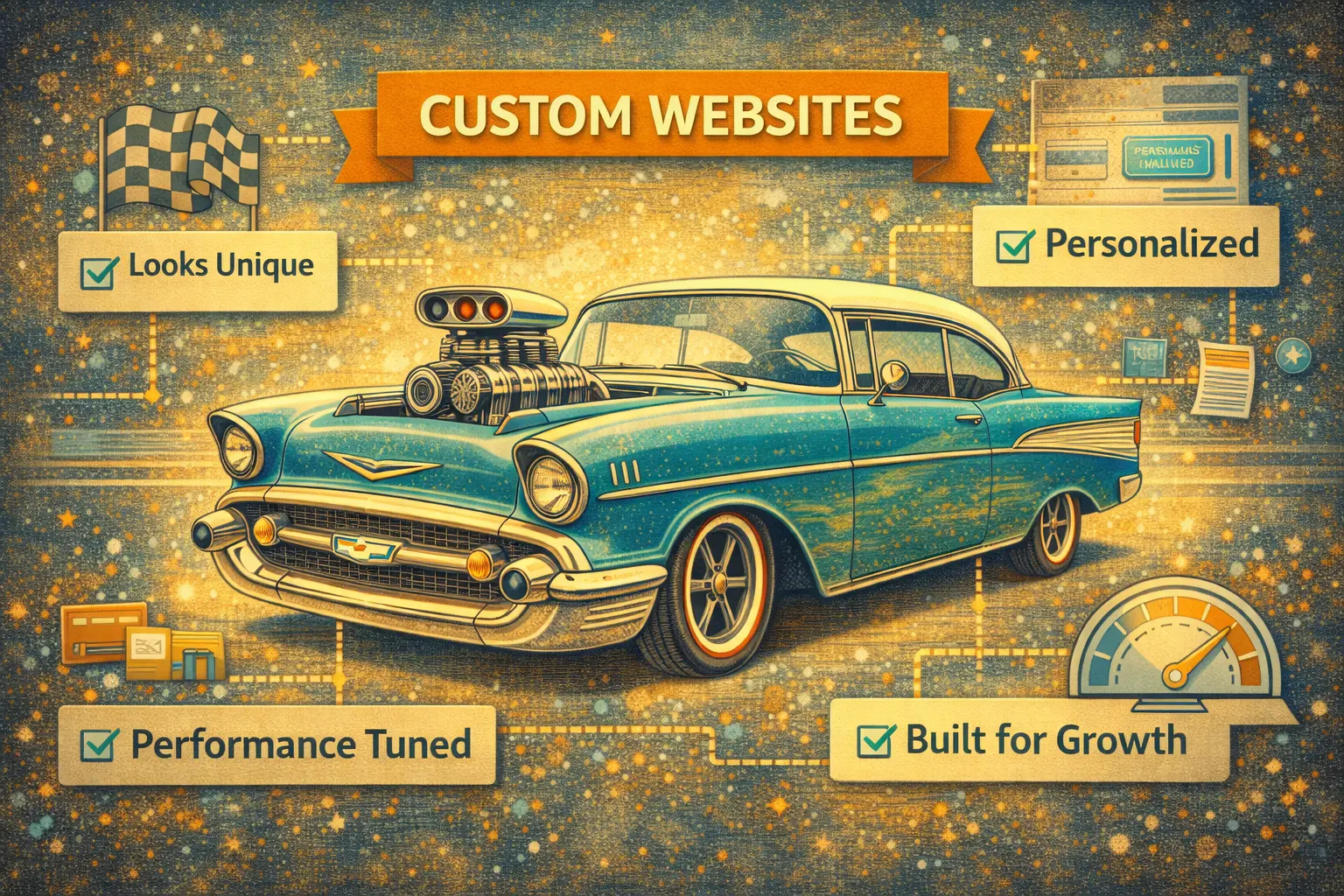
In today’s digital age, businesses rely on their websites as critical points of engagement. A custom website can differentiate a brand, enhance user experience, and better reflect its vision and values. Whether it’s through unique visual design, custom-built features, or specialized performance optimizations, custom websites provide endless possibilities.
Benefits of Custom Websites
Custom websites offer several key advantages, such as:
- Brand Alignment: Every visual and functional aspect is designed to align with your brand identity.
- Optimized Performance: Custom websites tend to load faster and provide a smoother experience than template-based sites.
- Competitive Advantage: They allow businesses to stand out in saturated markets by offering something unique.
- Tailored Experience: Businesses can create personalized journeys for visitors, leading to better conversions and user satisfaction.
By investing in a custom website, businesses position themselves to engage their audience more effectively and stand out from competitors using generic templates.
See how Atomic can help you with custom websites.
Why Choose Custom Websites Over Templates? {#why-choose-custom-websites-over-templates}
Although template-based websites are affordable and quicker to set up, they come with several limitations. A template website often lacks flexibility, restricts the ability to scale as your business grows, and might struggle with SEO and user experience optimizations. Here’s why choosing a custom website is the superior option:
1. Unique Design for Your Brand
Template websites come with pre-designed layouts, meaning multiple businesses might have a similar look and feel. With a custom website, your design is created from scratch to ensure a unique, brand-centric experience. The fonts, colors, layout, and imagery are crafted specifically to resonate with your target audience.
2. Scalable Solutions
As your business grows, so will your website needs. A custom website is designed to be scalable. Whether you’re looking to add new functionalities, integrate third-party tools, or expand the site’s content, custom websites offer the flexibility to evolve without major overhauls.
3. Enhanced User Experience (UX)
User experience is key to keeping visitors engaged and converting them into customers. Custom websites are designed with the specific needs of your users in mind, creating a seamless and intuitive experience. From optimized navigation to fast loading times, custom sites make every interaction with the user intentional and effective.
4. Advanced SEO Capabilities
Custom websites offer superior SEO benefits. Developers can create clean, lightweight code, ensuring faster page load times and better crawlability by search engines. They can also incorporate advanced SEO strategies from the ground up, which is often impossible with rigid templates that limit customization.
For businesses looking for a long-term investment in their digital presence, the choice is clear—custom websites offer flexibility, scalability, and performance advantages that template sites simply cannot.
Key Features of Custom Websites {#key-features-of-custom-websites}
Creating a custom website is not just about making it look good—it’s about integrating features that make it functional, scalable, and user-friendly. Below are some critical features every custom website should include:
1. Responsive Design
A must-have in today’s mobile-first world, responsive design ensures that your website adapts seamlessly across all screen sizes and devices. From smartphones to desktops, your visitors should have an optimized viewing experience without excessive zooming, scrolling, or re-sizing.
2. SEO-Ready Structure
A custom website can be built with search engine optimization at its core. This means structuring the code in a way that makes it easy for search engines to crawl and index your site. This involves creating clean code, minimizing load times, using proper header tags, and optimizing images.
3. Unique User Experience (UX)
Custom websites allow you to design tailored user journeys that speak directly to your audience. Whether it’s a streamlined shopping experience or a comprehensive blog platform, the UX should always be intuitive and goal-oriented. Strong UX can significantly impact conversion rates and customer retention.
4. Security Enhancements
Cybersecurity is a major concern for online businesses. Custom websites, built with security in mind, offer stronger protection against threats. Custom code and regular updates reduce the risk of vulnerabilities that are more common in widely used templates.
5. Custom Integrations
Need to integrate your website with third-party platforms such as CRM systems, email marketing tools, or payment gateways? With a custom website, the possibilities are endless. These integrations can be tailored to meet specific business needs, streamlining operations and improving the customer experience.
6. Advanced Analytics and Tracking
Understanding how users interact with your website is essential for continuous improvement. Custom websites can be built with advanced tracking capabilities, enabling you to collect data on user behavior, traffic patterns, and conversion metrics to optimize performance over time.
The Process of Building Custom Websites {#the-process-of-building-custom-websites}
Building a custom website is an in-depth process that requires close collaboration between the client and a web development team. While each project is unique, the process generally follows these key stages:
1. Discovery and Planning
The first step is understanding the client’s business, target audience, and goals for the website. This involves thorough research and strategy development, identifying key features and functionalities that will set the website apart. The goal of this stage is to lay the groundwork for a smooth development process.
2. Wireframing and Prototyping
During the design phase, wireframes or prototypes are created to outline the website’s structure. This stage focuses on user experience and functionality rather than visuals, giving the client a clear picture of how the website will operate.
3. Design
With the wireframes in place, the design team gets to work on creating a visually engaging interface. This is where branding elements like colors, typography, and imagery come into play. The goal is to ensure the design reflects the brand’s identity while offering an intuitive experience for users.
4. Development
In this stage, the website comes to life. Developers take the design and build out the website’s functionality, including front-end and back-end coding. Custom websites often require advanced coding techniques to ensure smooth operation, integration with third-party systems, and scalability.
5. Testing and Quality Assurance
Before launching, the website undergoes extensive testing to ensure everything works as intended. This includes functionality testing, performance checks across devices and browsers, and making sure all elements load quickly and smoothly.
6. Launch
Once the website is approved, it’s time to launch! The development team makes the website live on the domain and monitors performance for any immediate issues. Post-launch, the website enters the maintenance phase, where ongoing updates and optimizations are made to keep it running smoothly.
Building a custom website is a significant undertaking, but the results—greater flexibility, better user experience, and enhanced performance—are well worth the investment.
Custom Websites and SEO: How They Help You Rank {#custom-websites-and-seo}
One of the standout features of custom websites is their ability to be fully optimized for search engines. A well-built custom website integrates SEO best practices from the ground up, leading to improved rankings, increased organic traffic, and higher conversion rates.
1. Optimized Code
Custom websites are built with lean, efficient code, which contributes to faster load times—a key ranking factor for search engines. Clean, well-organized code also makes it easier for search engines to crawl and index your site, improving visibility.
2. Keyword-Driven Content
A successful SEO strategy revolves around integrating target keywords strategically throughout your website’s content. Custom websites allow you to structure your pages and headers in a way that prioritizes the most important keywords, improving your chances of ranking higher.
3. Improved User Engagement
Search engines reward websites that deliver excellent user experiences. With custom websites, you can create tailored user journeys that lead to longer on-site engagement, lower bounce rates, and higher click-through rates—each of which positively impacts your SEO rankings.
4. Mobile Optimization
Mobile-first indexing is now a priority for search engines. A custom website ensures that your content is optimized for mobile users, enhancing both UX and SEO performance. By ensuring fast load times, responsive design, and mobile-friendly layouts, your custom website becomes a valuable asset in your SEO toolkit.
Cost and Investment of Custom Websites {#cost-and-investment-of-custom-websites}
When considering the cost of a custom website, it’s important to look at it as a long-term investment rather than a one-time expense. The pricing of a custom website can vary widely depending on the complexity, features, and design elements involved. Here’s a breakdown of what to expect:
- Basic Custom Websites: Typically range from $3,000 to $10,000. These websites are suitable for smaller businesses or personal portfolios that don’t require extensive features but still want a unique, well-designed website.
- Mid-Range Projects: Cost between $10,000 and $30,000. This range is ideal for businesses that need e-commerce functionality, membership features, or third-party integrations.
- Advanced Custom Websites: For large-scale projects, budgets often exceed $30,000. These websites may include advanced functionalities, such as custom-built databases, complex integrations, or enterprise-level capabilities.
While template websites may seem cheaper initially, they often require expensive add-ons, regular updates, and maintenance that drive up long-term costs. Investing in a custom website offers higher ROI through better performance, stronger SEO, and scalability.
Choosing the Right Developer for Your Custom Website {#choosing-the-right-developer}
Selecting the right web developer for your custom website project is crucial. Here’s how to find the perfect fit:
1. Look for Experience
Choose developers who have a proven track record of building custom websites in your industry. A well-rounded portfolio showcases their versatility and ability to deliver unique, functional websites.
2. Technical Expertise
Ensure your developer has the right technical skills. They should be proficient in programming languages such as HTML, CSS, JavaScript, PHP, or Python, depending on your project’s needs.
3. Communication is Key
A good developer should be able to communicate clearly and provide regular updates on the project. Look for someone who listens to your needs and can provide recommendations based on your goals.
4. Post-Launch Support
Custom websites require ongoing maintenance, so it’s important to choose a developer who offers post-launch support. Whether it’s regular updates, security patches, or troubleshooting, having a reliable partner ensures your website continues to perform optimally.
Custom Websites for Small Businesses {#custom-websites-for-small-businesses}
Small businesses may think that custom websites are out of their reach, but that’s a misconception. While the upfront costs are higher, the benefits far outweigh the investment. For small businesses, a custom website offers:
1. Tailored Customer Experience
Small businesses can directly cater to their target audience through a custom site, offering specific features that meet their customers’ needs.
2. Better SEO Performance
With built-in SEO strategies, small businesses have the chance to compete against larger companies in search engine rankings. Custom websites are optimized for search performance from the start, ensuring better visibility.
3. Scalability for Growth
As your business grows, so can your website. Custom websites offer flexibility and scalability, ensuring you won’t outgrow your digital platform.
See how Atomic can help you with custom websites for small businesses.
The Future of Custom Websites {#the-future-of-custom-websites}
The digital landscape is constantly evolving, and custom websites are set to benefit from emerging technologies. Some key trends shaping the future include:
1. AI and Machine Learning
Artificial Intelligence (AI) will play a significant role in personalizing user experiences on custom websites. Through data collection and analysis, AI can deliver highly tailored content and product recommendations to users based on their behavior.
2. Voice Search Optimization
With the rise of voice-activated devices like Amazon Alexa and Google Assistant, custom websites will need to adapt by optimizing for voice search queries. This means focusing on natural language processing and conversational keywords.
3. Progressive Web Apps (PWAs)
PWAs provide a seamless, app-like experience directly through a website. As mobile usage continues to grow, PWAs are becoming increasingly popular for businesses looking to offer an engaging, fast, and offline-capable experience.
4. AR/VR Integration
Augmented Reality (AR) and Virtual Reality (VR) are set to revolutionize the way users interact with websites. Custom websites will be at the forefront of incorporating immersive experiences, from virtual tours to interactive 3D models.
By keeping up with these trends, businesses that invest in custom websites will stay ahead of the curve and deliver the kind of experiences users expect.
Conclusion
In today’s competitive digital market, a custom website provides the best opportunity to stand out and create a memorable online presence. While the initial investment may be higher, the long-term benefits—better SEO, enhanced user experience, and scalability—make it a smart choice for businesses looking to grow. Whether you’re a small business or an established brand, a custom website will help you reach your goals more effectively than any pre-made template ever could.
For more insights, see how Atomic can help you with custom websites.